
HERBARIUM / ADVANCED PLANT MONOGRAPH
Elder
Sambucus nigra L.
A temperate shrub or small tree of Venus, hedgerow thresholds, hollow channels, white flower and black fruit, ancestral memory, and the disciplined separation of ripe processed elderberry from flower, leaf, stem, bark, and unripe fruit.
MONOGRAPH PROFILE
Quick Reference
- Botanical Name
- Sambucus nigra
- Botanical Authority
- L.
- Plant Family
- Viburnaceae
- Older Family Placement
- Adoxaceae in many earlier references
- Primary Planetary Ruler
- Venus
- Element
- Water through juice, moisture, and liminality; Air through flowers, fragrance, hollow stems, and breath symbolism
- Metal
- Copper through Venusian correspondence
- Tria Prima Emphasis
- Mercury / Salt
- Primary Product Part
- Ripe black fruit
- Other Parts
- Flower, leaf, stem, bark, root, and pith require separate treatment
- Preparations Discussed
- Glycerite, capsules, syrup, juice, cooked food, dried fruit, and elderflower preparations
- Safety Classification
- Significant Caution
- Primary Safety Concerns
- Raw or unripe fruit and vegetative parts, cyanide-producing compounds, severe gastrointestinal symptoms, pregnancy and breastfeeding uncertainty, medicine use, and species or plant-part confusion
- Conservation / Sourcing
- Widely cultivated and introduced; species, cultivar, fruit ripeness, processing, wild-harvest permission, and contaminant testing require attention
ENTRY SUMMARY
Elder at a Glance
European or black elder, Sambucus nigra L., is an accepted shrub or small tree in the Viburnaceae family. Plants of the World Online records its native range from the Azores and Europe to western Iran and places it primarily within the temperate biome.
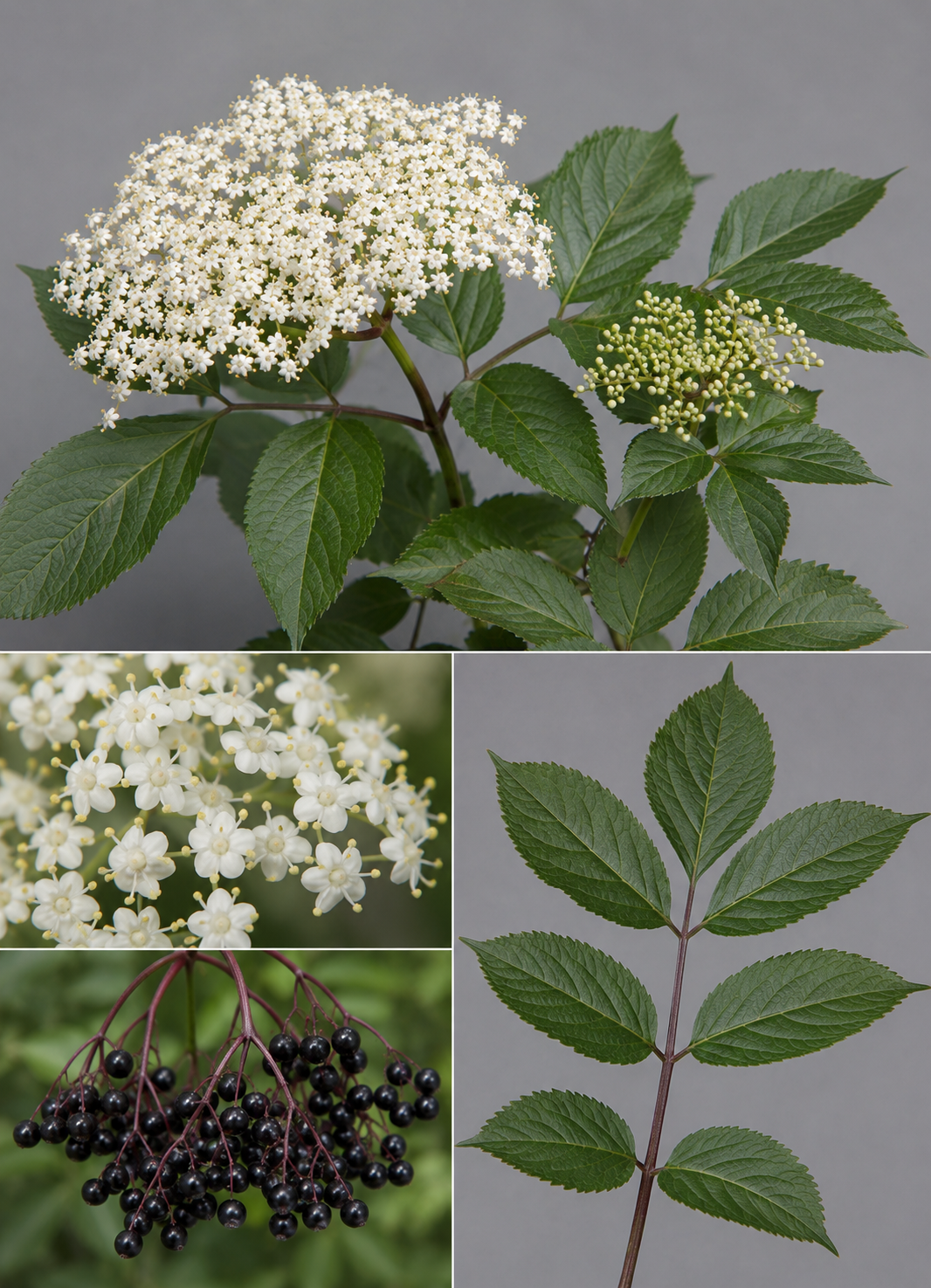
The plant bears opposite pinnate leaves, broad flat to gently domed clusters of small cream-white flowers, soft pith-filled young stems, and drooping clusters of purple-black fruits. Its fast growth, suckering habit, hollow stems, hedgerow role, and close relationship with birds and people have given elder an unusually rich cultural presence.
Species and plant part must be recorded precisely. American elder, Sambucus canadensis L., is currently accepted by Kew as a separate species, although older and commercial sources may treat it within S. nigra. Red elder and dwarf elder also differ from European black elder.
NCCIH reports that a small number of studies have examined elderberry for colds, influenza, and other upper-respiratory infections. Some preliminary findings suggest symptom relief, but evidence remains limited, and there is insufficient information for most other uses.
EMA adopted an elderflower monograph for relief of early common-cold symptoms based on long-standing use. It did not establish a European Union monograph for elderberry fruit because the available record did not adequately define traditional strength and dosage. Evidence attached to elderflower must not be transferred automatically to berry products.
Culpeper placed both elder and dwarf elder under Venus. Within HRMTC ALKMY ™, elder is studied as a plant of living threshold: white flower becomes black fruit, soft pith opens a hollow passage through wood, and a boundary shrub joins cultivated ground with the untamed edge.
In This Monograph
01
Botanical Identity and Authentication
This entry concerns European or black elder, Sambucus nigra L. The broad common name “elderberry” may refer to several Sambucus species, subspecies, cultivars, fruit colors, or mixed commercial materials.
Botanical Profile
- Common Names
- Elder, elderberry, black elder, European elder, common elder
- Botanical Name
- Sambucus nigra
- Botanical Authority
- L.
- Plant Family
- Viburnaceae
- Older Family Placement
- Adoxaceae
- Taxonomic Status
- Accepted species in Plants of the World Online
- Primary Product Material
- Fully ripe, appropriately processed fruit
- Separately Defined Material
- Flower, leaf, stem, bark, root, pith, and unripe fruit
Geographic Profile
- Native Range
- Azores and Europe to western Iran according to Kew.
- Introduced Range
- Introduced into parts of North Africa, Asia, Australasia, North America, and South America.
- Preferred Habitat
- Hedgerows, woodland edges, disturbed ground, stream corridors, banks, field margins, and nitrogen-rich soils.
- Growth Form
- Fast-growing, often multi-stemmed deciduous shrub or small tree.
- Ecological Relationships
- Flowers support insects; fruits feed birds and mammals; stems and thickets provide habitat and boundary structure.
Harvest Profile
Fruit Ripeness
Harvest only fully colored, mature fruit appropriate to the species and cultivar. Green, red-tinged, or incompletely ripe fruit should not be included.
Fruit Separation
Remove leaves, stems, and excessive pedicel material. Finished products should specify whether fruit is fresh, dried, juiced, concentrated, or extracted.
Flower Harvest
Elderflower is gathered separately and must not be represented as the same medicinal substance as elderberry fruit.
Identification
Leaves
Opposite pinnate leaves usually bear five to seven serrated leaflets, sometimes more, with a strong green odor when crushed.
Stems and Bark
Young stems are green and pith-filled; older bark becomes gray-brown, corky, fissured, and marked with lenticels.
Pith
Branches contain a soft white pith that can be removed, leaving a hollow channel historically used for whistles, pipes, and toys.
Growth Pattern
Multiple stems and suckers may form dense hedges or thickets.
Flowers
Numerous small cream-white flowers occur in broad flat or slightly domed clusters and have a distinctive sweet, musky fragrance.
Fruit
Small, juicy, purple-black drupes develop in drooping clusters and contain multiple small stones.
Taste
Ripe fruit is tart, dark, and mildly astringent. Raw sensory testing is not an appropriate authentication method.
Season
Flowers appear in late spring or early summer; fruit matures later in summer or early autumn depending on region and cultivar.
Commonly Confused Species
American elder, blue elder, red elder, dwarf elder, pokeweed, dogwood fruit clusters, and other dark-fruited shrubs may create confusion. Red fruit or an herbaceous growth form should trigger re-identification.
Adulteration and Substitution
Fruit powders and extracts may contain another Sambucus species, undeclared carrier, excessive stems, artificial color, exhausted material, or weak anthocyanin content. Require botanical name, plant part, processing, and lot testing.
02
Ethical Sourcing and Conservation
- Wildcrafted or Cultivated
- Both; cultivated fruit provides stronger identity, ripeness, and contaminant control
- Conservation Context
- Widely distributed and often abundant; local habitat, cultivar, invasive status, and harvest pressure still matter
- Primary Sourcing Concern
- Roadside pollution, pesticide use, incorrect species, unripe fruit, excessive stem material, microbial spoilage, and poor processing
- Wildlife Consideration
- Leave sufficient flower and fruit for birds, insects, and natural regeneration
Hedgerow Stewardship
Elder often stabilizes banks and contributes to hedgerow habitat. Harvest should preserve structural cover, avoid destructive cutting during nesting periods, and maintain enough flowering and fruiting material for wildlife.
Wild-Harvest Conditions
Avoid roadsides, railway corridors, sprayed field margins, contaminated drainage, industrial ground, and land without permission. Fruit can accumulate dust and surface contaminants and spoils quickly when damaged.
Commercial Traceability
Prefer suppliers that disclose species, fruit origin, cultivar when relevant, harvest maturity, fresh or dried status, extraction or concentration method, excipients, lot number, and testing for identity, microbes, pesticides, heavy metals, and undeclared colorants.
03
Hermetic Correspondences
- Primary Planetary Ruler
- Venus
- Historically Documented Source
- Culpeper’s Elder Tree entry
- Metal
- Copper
- Primary Elemental Reading
- Water through juice, moisture, medicine of flowers and fruit, and threshold symbolism
- Secondary Elemental Reading
- Air through fragrance, pollen, hollow stems, whistles, breath, and spirit passage
- Symbolic Sphere
- Protection, threshold, ancestry, fertility, transformation, beauty, grief, reciprocity, and the cycle from white flower to black fruit
Historical Attribution
Historically Documented Culpeper states that both elder and dwarf elder are under the dominion of Venus. His medicinal claims for shoots, leaf, bark, root, fruit, and flower belong to seventeenth-century medicine and should not be reused as modern directions.
Correspondence Rationale
Venus appears through fragrant flowers, dark fruit, food and drink, garden and hedgerow beauty, fertility of suckering growth, and the tree’s long relationship with domestic boundaries. Copper follows through traditional planetary-metal correspondence.
Alternative Readings
The Moon may be invoked through white flower, dark fruit, water, ancestry, and night. Saturn may appear through elderhood, death, boundary, and hollow wood. These are later or parallel symbolic readings and should not replace the documented Venusian attribution.
04
The Tria Prima
This section distinguishes observable plant qualities from Hermetic interpretation and does not disclose laboratory or spagyric procedures.
SULFUR
Soul
Philosophical Expression
Fragrant flower, black-purple color, tartness, fermentation history, vitality, attraction, and the dramatic transition from white bloom to dark fruit.
Material Expression
Anthocyanin pigments, flavonoids, phenolic acids, aromatic flower constituents, organic acids, and color-bearing fruit fractions.
Interpretation
Elder’s Sulfur changes face across the season: pale and fragrant in flower, dark and concentrated in fruit.
MERCURY
Spirit
Philosophical Expression
Hollow passage, scent, pollination, bird dispersal, fermentation, transformation, and movement among food, medicine, instrument, dye, and folklore.
Material Expression
Water-soluble pigments and phenolics, fruit juice, volatile flower compounds, sugars supporting fermentation, and the air-filled channel left by removed pith.
Interpretation
Mercury is elder’s passage-making principle: matter is opened into channel, fruit becomes drink, and seed moves through animals into new ground.
SALT
Body
Philosophical Expression
Woody boundary, hedge, bark, lineage, rooted continuity, structural pith, and the fixed body that separates safe fruit preparation from unsafe plant parts.
Material Expression
Wood, bark, fibers, pectin, minerals, fruit stones, cell walls, and nonvolatile structural matter.
Interpretation
Salt makes elder a threshold tree. It creates form, boundary, and the distinctions that responsible use must preserve.
05
Doctrine of Signatures
Doctrine-of-signatures material is symbolic or historical interpretation. It is not evidence that elder treats corresponding organs or conditions.
Interpretive Meaning
Modern Symbolic Interpretation The white flower becoming black fruit suggests a complete seasonal polarity held within one plant. Elder therefore symbolizes transformation that does not abandon lineage.
The Hollow Stem
Wood surrounding removable pith creates a natural conduit. Symbolically, the elder stem becomes a vessel for breath, sound, message, and passage between domains.
Counter-Reading
Threshold can become ambiguity. Fertility can become invasive spread. Protection can become superstition. A rich folklore can obscure the practical danger of using the wrong plant part.
06
Botanical and Chemical Profile
Major Fruit Constituent Groups
Anthocyanin Profile
Black elder fruit is especially associated with cyanidin-derived anthocyanins, including cyanidin-3-sambubioside and cyanidin-3-glucoside. Exact concentration depends on species, cultivar, maturity, climate, extraction, processing, and storage.
Cyanogenic Constituents
Elder contains cyanogenic glycosides capable of releasing cyanide. Distribution varies among species, cultivar, plant part, maturity, and processing. Unripe fruit and vegetative parts present the most important household safety concern.
Solubility and Processing
- Water / Juice Fractions
- Anthocyanins, sugars, organic acids, pectins, minerals, and water-soluble phenolics
- Glycerite
- Glycerin-water extraction can capture water-accessible fruit constituents; current glycerin, water, concentration, and serving should be verified
- Dry Powder / Capsule
- May contain whole dried fruit, juice powder, carrier-dried concentrate, or extract; the label must define the material
- Heat and Storage
- Cooking reduces cyanogenic risk, while prolonged heat, light, oxygen, and storage may degrade anthocyanin color and quality
Known Variability
Fruit chemistry varies with species, cultivar, climate, ripeness, fruit-to-stem ratio, harvest timing, freezing, drying, heating, juice concentration, carrier use, extraction, fermentation, light, oxygen, and storage.
Chemical and regulatory literature reviewed through: August 2026.
07
Traditional and Contemporary Virtues
Elderflower Traditional Use
Established Traditional Use EMA recognizes specified elderflower preparations for relief of early symptoms of the common cold on the basis of long-standing use. This conclusion concerns the dried flower, not elderberry fruit.
Elderberry Traditional and Folk Context
Traditional / Folk Use Elderberry has a long food and folk-medicine record involving syrups, juices, wines, preserves, and preparations used during seasonal respiratory illness.
Historical Claims
Historical Claim Culpeper recorded strong purgative, urinary, topical, and other actions for elder shoots, leaves, bark, root, berries, and flowers. Many of these plant parts are unsuitable for unsupervised modern use.
Contemporary Herbal Context
Elderberry is commonly promoted for immune support, cold and influenza symptoms, antioxidant intake, and seasonal wellness. Preliminary human findings should not be expanded into claims of preventing infection, shortening every illness, or replacing vaccination, testing, antiviral treatment, or medical evaluation.
Energetic Qualities
- System
- Later Western herbal interpretation
- Temperature
- Flower often described as warming and dispersing; fruit as cooling to neutral and nourishing
- Moisture
- Moistening through juice, with astringent fruit skin and tannins
- Tonicity
- Flower dispersing; fruit gently toning and nutritive in traditional language
- Movement
- Flower outward and upward; fruit inward, darkening, and consolidating
- Primary Traditional Affinity
- Seasonal respiratory and food-medicine contexts, differentiated by plant part
Spiritual and Ritual Associations
Hermetic Interpretation Threshold, ancestry, reciprocity, protection, grief, fertility, fairy or spirit lore, transformation, musical breath, and the obligation to ask before taking.
08
Evidence Classification
Botanical Authority
Kew accepts Sambucus nigra L. as a temperate shrub or tree native from the Azores and Europe to western Iran.
Elderflower Monograph
EMA recognizes specified elderflower preparations for relief of early common-cold symptoms based on long-standing use.
Elderberry Regulatory Outcome
EMA did not establish an EU herbal monograph for elderberry fruit because available traditional records did not adequately define a specified strength and dosage.
Human Evidence
NCCIH reports a small number of studies and preliminary findings suggesting possible relief of cold, influenza, or other upper-respiratory symptoms.
Evidence Limitations
Study numbers, sample sizes, formulations, dosing, illness definitions, and sponsorship limit broad conclusions. There is insufficient information for most other health purposes.
COVID-19 Claims
NCCIH states that there is no good evidence supporting elderberry for COVID-19 and advises against relying on it for prevention or treatment.
Historical Claim
Culpeper’s purgative, urinary, wound, skin, and venom claims remain historical and are not modern treatment instructions.
Hermetic Interpretation
Venus is historically documented; Water, Air, copper, threshold, ancestry, and transformation are correspondence-based readings.
09
Therapeutic and Preparation Context
Evidence-Aligned Contexts
- Food preparations made from fully ripe, properly processed fruit.
- Limited preliminary study of defined elderberry products for symptoms associated with colds, influenza, or other upper-respiratory infections.
- EMA-recognized traditional use of elderflower—not berry—for early common-cold symptoms.
- No established role as a substitute for diagnosis, vaccination, antiviral medication, antibiotics when indicated, or urgent medical care.
Preparation Forms
Fruit Glycerite
Confirm species, ripe fruit identity, glycerin and water content, concentration, serving, age directions, storage, and current warnings.
Capsules
Confirm whether the material is whole fruit, juice powder, extract, concentrate, or a blend and whether carriers or other botanicals are included.
Syrup
Review fruit processing, sweeteners, preservatives, serving, refrigeration, microbial stability, and age directions.
Juice or Concentrate
Concentration, heat processing, serving, sugar content, and storage determine the final product.
Dried Fruit
Dried ripe fruit requires correct identity and processing; it is not equivalent to fresh raw fruit or a standardized extract.
Elderflower
A separate dried flower drug with different constituents, traditional use, safety, and dosage forms.
When Professional Evaluation Is Appropriate
Seek medical care for difficulty breathing, chest pain, dehydration, confusion, persistent high fever, severe vomiting or diarrhea, cyanide-exposure concern, symptoms in a very young infant, significant immune compromise, pregnancy complications, or worsening respiratory illness.
10
Safety Profile
Raw or Unripe Fruit
NCCIH warns that raw or unripe elderberries contain cyanide-producing substances capable of causing nausea, vomiting, and severe diarrhea. Large exposures may cause serious illness.
Leaves and Stems
Leaves and stems also contain cyanide-producing substances and should not be included casually in fruit preparations. Bark and root belong to additional high-caution historical contexts.
Cooking and Processing
NCCIH states that cooking eliminates the toxin. Finished products should nevertheless come from reputable manufacturers with controlled processing and plant-part specifications.
Poisoning Symptoms
Severe nausea, repeated vomiting, profuse diarrhea, weakness, dizziness, breathing difficulty, confusion, or collapse after elder exposure requires urgent poison-control or medical guidance.
Pregnancy and Breastfeeding
NCCIH reports that little is known about medicinal elderberry safety during pregnancy or breastfeeding. Seek qualified guidance before supplemental use.
Medicine Use
NCCIH advises people taking medicines to discuss elderberry or other herbal products with a healthcare provider because harmful interactions are possible.
Children
Age directions vary by product and formulation. Do not give adult capsules or concentrated extracts to children, and consider sugar, glycerin, preservatives, and choking risk.
Allergy
Allergic reaction is possible to elder fruit, flower, or another ingredient. Stop use and seek urgent care for swelling, breathing difficulty, or widespread hives.
Respiratory Illness
Do not delay testing, antiviral treatment, or evaluation of severe symptoms while relying on elderberry. Preliminary symptom research does not establish infection control.
Product Quality
Verify botanical name, ripe fruit part, processing method, concentration, serving, excipients, microbial stability, storage, expiration, and lot testing.
Route- and Product-Specific Safety
- Glycerite
- Review fruit identity, glycerin and water content, concentration, age directions, storage, and microbial stability
- Capsules
- Review whole fruit versus extract or juice powder, serving, carriers, other botanicals, swallowing risk, and medicine use
- Homemade Product
- Requires certain species identification, complete ripeness, removal of stems and leaves, controlled cooking, hygiene, and safe storage
- Elderflower Product
- Evaluate under a flower-specific preparation and monograph rather than transferring berry directions
11
Historical, Cultural, and Ritual Context
Hedgerow and Domestic History
Elder has long grown near homes, farms, waterways, and field boundaries. It provided flowers, fruit, dye, wood, pith, toys, whistles, fermented drinks, preserves, and household remedies.
Culpeper’s Elder Tree
Culpeper regarded elder as so familiar that description seemed unnecessary, noted its use in hedges and banks, placed it under Venus, and recorded separate uses for shoots, leaf, bark, root, berry, and flower. Modern toxicology requires much stricter plant-part boundaries.
Hollow Wood and Music
The removable pith made young elder branches useful for pipes, whistles, blowguns, popguns, and other instruments. This material history supports elder’s symbolic association with breath and communication.
Protection and Spirit Lore
European folklore often treats elder as inhabited, protective, dangerous to cut without respect, or associated with women, ancestors, witches, fairies, death, and rebirth. Traditions vary by region and should not be collapsed into one universal belief.
Food and Fermentation
Ripe fruit has been processed into wine, cordial, syrup, jam, jelly, pie, sauce, and dye. Elderflower has a separate culinary history in drinks, fritters, and flavoring.
Cultural Caution
Do not merge European black elder folklore, Indigenous uses of American elder species, medieval medicine, Culpeperian astrology, modern supplement trials, and commercial “immune” marketing into one seamless lineage.
12
Symbolic Reading
Botanical Symbolism
Elder lives at edges and multiplies through suckers, seed, and regrowth. Its many small flowers become many dark fruits, suggesting community, lineage, and abundance that depends on relationship.
Hermetic Interpretation
Venus joins beauty with reciprocity. Water carries juice and memory; Air moves fragrance, pollen, birds, breath, and sound through hollow stems. Copper symbolizes conductive relationship within protected form.
The Lesson of Transformation
Raw material requires discernment and processing. The same plant may offer food in ripe prepared fruit while presenting danger in unripe fruit or vegetative parts. Transformation is therefore not decoration; it is a condition of responsible use.
Shadow or Counter-Reading
Protection can become fear. Ancestral reverence can become invented tradition. Abundance can become careless harvesting. “Natural immune support” can become avoidance of evidence-based care.
13
Study Questions
- Which features identify Sambucus nigra?
- How does European black elder differ from American elder?
- Why must fruit, flower, leaf, stem, bark, and root remain separate?
- What does NCCIH say about raw or unripe berries?
- What preliminary evidence exists for upper-respiratory symptoms?
- Why did EMA establish an elderflower monograph but not an elderberry-fruit monograph?
- What makes Venus a historically documented attribution?
- How do the hollow stem and hedgerow habitat shape elder’s symbolic reading?
- Why are glycerite and capsules not automatically equivalent?
- What does elder teach about transformation, safety, and reciprocity?
15
References and Source Record
Botanical References
Professional and Governmental Sources
Scientific and Chemical Sources
Historical and Correspondence Sources
Product Resources
- Herb Pharm — Black Elderberry Glycerite, linked through Fullscript.
- NOW Foods — Elderberry capsules, linked through Fullscript.
Archive Notes
Elder stands at the boundary between cultivated and wild ground, white flower and black fruit, wood and hollow channel, nourishment and poison, household familiarity and ancestral awe.
The archive must hold these opposites without confusion. It should preserve folklore without inventing universality, present preliminary evidence without turning it into cure, and offer product resources without weakening the fundamental distinctions of species, plant part, ripeness, and processing.
Revealed in Practice.