
HERBARIUM / ADVANCED PLANT MONOGRAPH
Ginger
Zingiber officinale Roscoe
A tropical rhizomatous perennial of heat, movement, digestion, circulation, culinary transformation, and the disciplined distinction between food-level ginger, dried powder, liquid extract, and concentrated capsules.
MONOGRAPH PROFILE
Quick Reference
- Botanical Name
- Zingiber officinale
- Botanical Authority
- Roscoe
- Plant Family
- Zingiberaceae
- Primary Editorial Ruler
- Mars — modern Hermetic interpretation
- Historical Attribution Status
- Culpeper describes qualities and uses but does not state a planetary government in the cited ginger entry
- Element
- Fire through pungent heat and movement; Earth through the rhizome and fixed aromatic body
- Metal
- Iron within the modern Mars correspondence used here
- Tria Prima Emphasis
- Sulfur / Mercury
- Primary Part Used
- Rhizome
- Plant Condition
- Fresh, dried, powdered, extracted, candied, pickled, or juiced
- Preparations Discussed
- Liquid extract, capsules, powder, tea, decoction, food, juice, and combination products
- Safety Classification
- Significant Caution
- Primary Safety Concerns
- Heartburn, abdominal discomfort, diarrhea, mouth or throat irritation, pregnancy context, medicine interactions, anticoagulant or antiplatelet use, surgery, and biliary disease
- Conservation / Sourcing
- Widely cultivated; identity, cultivar, pesticide exposure, microbial quality, processing, carrier ingredients, and adulteration require attention
ENTRY SUMMARY
Ginger at a Glance
Zingiber officinale Roscoe is an accepted rhizomatous perennial in the Zingiberaceae family. Plants of the World Online records its native range from the eastern Himalaya to south-central China and places it primarily in the seasonally dry tropical biome.
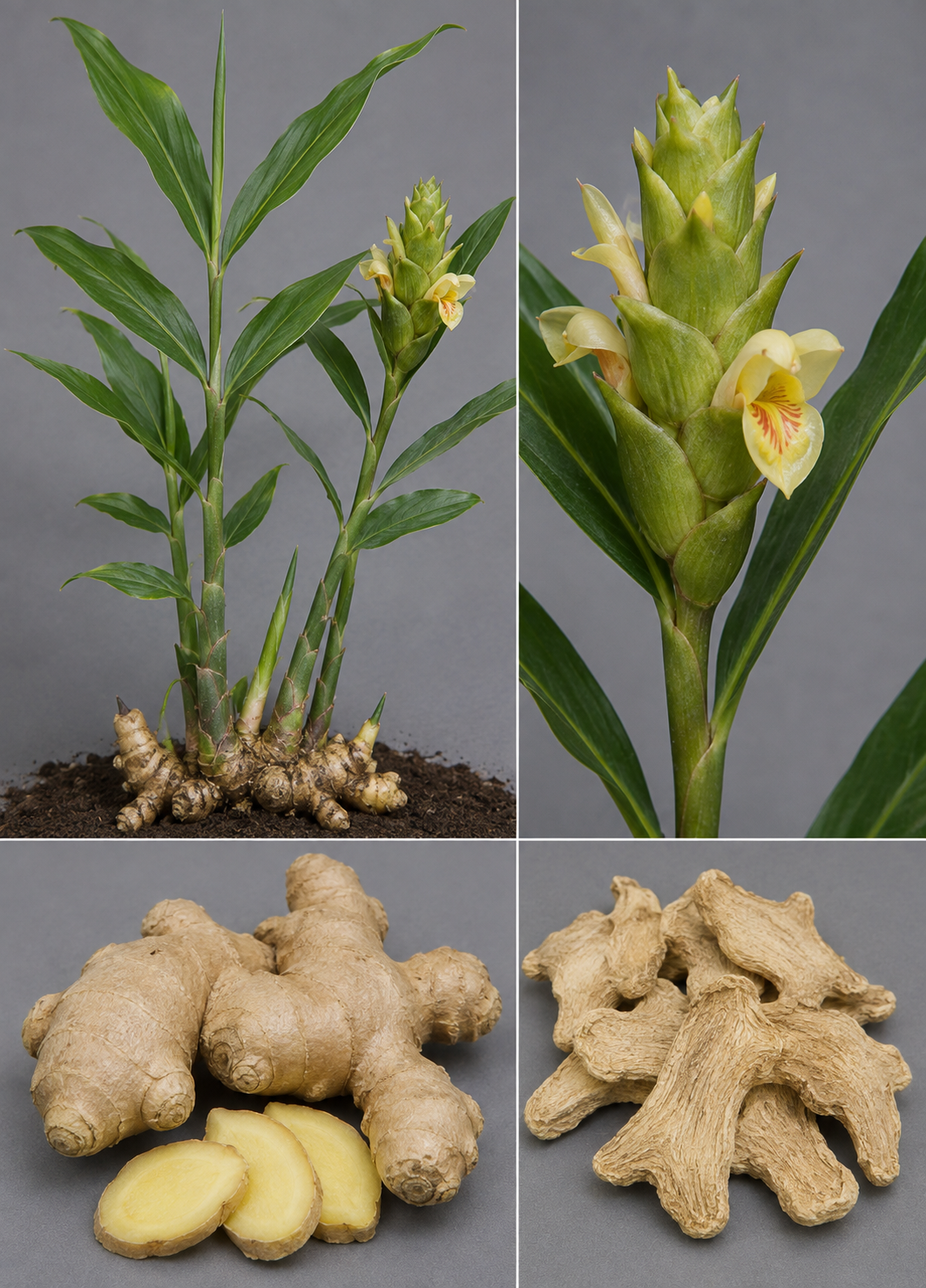
Ginger produces upright pseudostems formed by overlapping leaf sheaths, narrow lanceolate leaves, separate cone-like flowering shoots, and thick branching aromatic rhizomes. The rhizome is commonly called ginger root, but botanically it is an underground stem.
EMA recognizes a defined powdered ginger-rhizome preparation for prevention of nausea and vomiting in motion sickness on the basis of well-established use and clinical evidence. NCCIH notes, however, that most motion-sickness studies have not found ginger helpful. These conclusions differ because regulatory findings may concern a specific preparation and evidence set, while NCCIH summarizes a broader literature.
NCCIH reports that ginger may help nausea and vomiting associated with pregnancy and may reduce the severity of menstrual cramps. Evidence is uncertain for chemotherapy-related nausea, postoperative nausea, and many other promoted uses; osteoarthritis studies are often low quality.
Culpeper’s pharmaceutical section describes ginger as warming the stomach, supporting digestion, expelling wind, and being hot and dry. The cited entry does not state a planetary government. This monograph therefore uses Mars as an explicitly modern Hermetic interpretation rather than presenting it as a historical Culpeperian attribution.
Within HRMTC ALKMY ™, ginger is studied as a plant of directed heat: its rhizome stores concentrated pungency beneath the soil, then releases warmth, scent, taste, and movement when cut, crushed, dried, cooked, or extracted.
In This Monograph
01
Botanical Identity and Authentication
This entry concerns Zingiber officinale Roscoe. “Ginger” may also describe wild gingers, ornamental gingers, shampoo ginger, galangal, or flavor preparations that are not botanically or chemically equivalent.
Botanical Profile
- Common Names
- Ginger, common ginger, culinary ginger
- Botanical Name
- Zingiber officinale
- Botanical Authority
- Roscoe
- Plant Family
- Zingiberaceae
- Taxonomic Status
- Accepted species in Plants of the World Online
- Primary Medicinal Material
- Whole or cut rhizome, fresh or dried according to preparation
- Botanical Structure
- Rhizome: a horizontal underground stem bearing nodes, buds, roots, and new shoots
- Excluded by Identity
- Asarum wild ginger, galangal, turmeric, shampoo ginger, and unidentified mixed ginger-family material
Geographic Profile
- Native Range
- Eastern Himalaya to south-central China according to Kew.
- Introduced / Cultivated Range
- Cultivated throughout tropical and subtropical Asia and in parts of Africa, the Americas, Oceania, and greenhouse production worldwide.
- Preferred Habitat
- Warm, humid cultivation with fertile, well-drained soil, seasonal moisture, and protection from severe cold.
- Growth Form
- Perennial rhizomatous geophyte producing seasonal leafy pseudostems.
- Reproduction
- Commercial ginger is commonly propagated vegetatively from rhizome pieces rather than seed.
Harvest Profile
Young Rhizome
Harvested earlier for tender texture, mild pungency, pickling, and fresh culinary use.
Mature Rhizome
Harvested later for stronger fiber, pungency, drying, powder, extraction, or storage.
Post-Harvest Handling
Wash, cure, cut, dry, and store under controlled conditions. Avoid mold, bacterial contamination, excessive pesticide residues, and undeclared bleaching or coloring.
Identification
Pseudostems
Upright leafy shoots are formed by tightly overlapping leaf sheaths rather than a woody stem.
Leaves
Alternate, narrow, lanceolate leaves occur in two ranks and have a prominent midrib.
Inflorescence
Flowering shoots arise separately from the leafy pseudostems and bear compact cone-like spikes with overlapping bracts.
Flowers
Small yellow-green flowers may have purple or dark markings and emerge from the bracts.
Rhizome Exterior
Irregularly branched, segmented, buff to light brown, and marked by nodes, rings, and bud scars.
Rhizome Interior
Pale yellow to deeper yellow, fibrous, moist when fresh, and increasingly dense when mature or dried.
Aroma
Strongly aromatic, citrusy, warm, earthy, and spicy.
Taste
Pungent, warming, aromatic, and slightly sweet. Taste varies with freshness, cultivar, drying, and storage.
Commonly Confused Materials
Galangal, turmeric, zedoary, shampoo ginger, wild ginger, and other Zingiberaceae rhizomes may resemble dried or powdered ginger.
Adulteration and Quality Problems
Powder may contain starch, spent material, another rhizome, excess fiber, undeclared carrier, artificial color, or poor microbial quality. Require species, rhizome identity, origin, processing, lot, and contaminant documentation.
02
Ethical Sourcing and Conservation
- Wildcrafted or Cultivated
- Predominantly cultivated
- Conservation Context
- Commercial ginger is widely cultivated; sustainability concerns center more on agriculture, labor, soil, water, and disease than wild scarcity
- Primary Sourcing Concern
- Pesticide residues, soil degradation, irrigation quality, seed-rhizome disease, labor conditions, microbial contamination, and unclear carrier ingredients
- Recommended Practice
- Prefer traceable cultivation, integrated pest management, soil stewardship, and lot-specific testing
Agricultural Stewardship
Ginger is a nutrient-demanding crop that can contribute to erosion or soil depletion when grown repeatedly without rotation, organic matter replacement, and water management.
Propagation and Disease
Vegetative propagation can carry bacterial, fungal, or viral disease from one crop cycle to the next. Clean planting stock and transparent post-harvest controls matter.
Commercial Traceability
Prefer products documenting botanical name, country and region of origin, fresh or dried rhizome, cultivation system, extraction ratio, alcohol content, powder or extract status, carrier ingredients, and testing for microbes, pesticides, heavy metals, and adulteration.
03
Hermetic Correspondences
- Primary Editorial Ruler
- Mars — modern interpretation
- Historical Attribution Status
- Culpeper’s cited ginger entry describes qualities and uses but does not assign a planet
- Metal
- Iron within the modern Mars correspondence
- Primary Elemental Reading
- Fire through pungency, heat, activation, and rapid sensory movement
- Secondary Elemental Reading
- Earth through rhizome, storage, nourishment, and grounded persistence
- Symbolic Sphere
- Courage, movement, digestion, circulation, initiation, transformation, appetite, directed heat, and the conversion of stagnation into motion
Editorial Method
Modern Hermetic Interpretation Mars is used transparently as a contemporary correspondence based on pungency, warming character, activation, cutting intensity, and the plant’s traditional association with movement and digestion.
Historical Qualities
Historically Documented Culpeper’s pharmaceutical summary describes ginger as helping digestion, warming the stomach, expelling wind, and being hot and dry. It does not state a planetary government in that entry.
Alternative Attributions
The Sun may be invoked through warmth and vitality; Mercury through digestion, travel, and anti-nausea use. These remain alternative modern readings rather than documented rulerships in the cited historical source.
04
The Tria Prima
This section separates observable material qualities from Hermetic interpretation and does not disclose laboratory or spagyric procedures.
SULFUR
Soul
Philosophical Expression
Pungency, heat, aroma, appetite, activation, vitality, and the immediate sensory force released when the rhizome is cut.
Material Expression
Gingerols, shogaols, paradols, zingerone, volatile oil, and aromatic phenolic fractions.
Interpretation
Ginger’s Sulfur is unmistakable: concentrated warmth carried through taste and scent.
MERCURY
Spirit
Philosophical Expression
Movement, digestion, travel, nausea, circulation, aroma diffusion, and transformation among fresh, dried, cooked, powdered, and extracted forms.
Material Expression
Volatile terpenes, solvent-dependent phenolics, thermal conversion of gingerols into shogaols and zingerone, and mobile aromatic fractions.
Interpretation
Mercury appears in ginger’s transformations: drying and heat do not merely preserve the rhizome; they change its chemical expression.
SALT
Body
Philosophical Expression
Rhizome structure, stored nourishment, branching continuity, fiber, grounded heat, and the fixed body from which new shoots emerge.
Material Expression
Starches, fibers, proteins, minerals, cell walls, water, and nonvolatile structural matter.
Interpretation
Salt contains Fire underground. Ginger is not flame without body; it is heat stored in structure.
05
Doctrine of Signatures
Doctrine-of-signatures material is symbolic or historical interpretation. It is not evidence of efficacy or safety.
Interpretive Meaning
Modern Symbolic Interpretation Ginger’s branching rhizome suggests stored movement: direction held beneath the surface until conditions call it upward.
Heat and Transformation
The chemistry of ginger changes with drying and cooking. Symbolically, this makes ginger an emblem of heat that transforms rather than merely burns.
Counter-Reading
Activation can become irritation. Courage can become aggression. Movement can become restlessness. A warming herb can worsen heartburn or obscure a condition requiring diagnosis.
06
Botanical and Chemical Profile
Major Constituent Groups
Fresh and Dried Chemistry
Fresh ginger is especially associated with gingerols. Drying, storage, and heating can convert gingerols into more dehydrated compounds such as shogaols, while cooking can produce zingerone and other transformation products.
Volatile Profile
Ginger aroma arises from a complex volatile fraction that may include zingiberene and other sesquiterpenes and monoterpenes. Composition changes with cultivar, geography, maturity, drying, storage, and extraction.
Solubility and Preparation
- Water Preparation
- Extracts soluble pungent compounds, starch-derived matter, minerals, and a portion of the volatile fraction
- Alcohol Preparation
- Broadens extraction of gingerols, shogaols, volatile compounds, and less polar phenolics depending on solvent strength
- Powder
- Contains the dried whole-rhizome matrix unless an extract or carrier is added
- Heat Processing
- Changes pungent chemistry and aroma; cooked, dried, and raw ginger are chemically related but not identical
Known Variability
Composition varies with cultivar, origin, soil, maturity, young versus mature rhizome, fresh versus dried state, peeling, drying temperature, storage, extraction solvent, ratio, carrier ingredients, and heat treatment.
Chemical and regulatory literature reviewed through: August 2026.
07
Traditional and Contemporary Virtues
Well-Established Regulatory Context
Well-Established Use EMA recognizes a defined powdered ginger-rhizome preparation for prevention of nausea and vomiting in motion sickness in adults.
Pregnancy-Related Nausea
Supported but Context-Dependent NCCIH reports that research indicates ginger may help nausea and vomiting associated with pregnancy. Pregnancy supplementation should still be reviewed with the prenatal-care professional.
Menstrual Pain
Preliminary Clinical Support NCCIH reports that ginger dietary supplements might help reduce the severity of menstrual cramps.
Uncertain or Mixed Contexts
Evidence remains uncertain for chemotherapy-associated nausea, postoperative nausea, and many other promoted conditions. Knee-osteoarthritis findings may be positive but much of the research is poor quality.
Historical Claims
Historical Claim Culpeper’s pharmaceutical summary describes ginger as digestive, warming, wind-expelling, and useful in several historical contexts. These statements are not modern treatment recommendations.
Energetic Qualities
- System
- Later Western herbal interpretation
- Temperature
- Warming to hot
- Moisture
- Drying in pungent action, though fresh rhizome contains substantial water
- Tonicity
- Stimulating and dispersing
- Movement
- Outward, upward, circulating, and digestive
- Primary Traditional Affinity
- Digestive, travel, menstrual, and circulation-related contexts
Spiritual and Ritual Associations
Modern Hermetic Interpretation Courage, action, appetite, movement, warming of intention, protection, prosperity, and transformation through applied heat.
08
Evidence Classification
Botanical Authority
Kew accepts Zingiber officinale Roscoe and records its native range from the eastern Himalaya to south-central China.
Well-Established Use
EMA recognizes a defined powdered-rhizome preparation for prevention of nausea and vomiting in motion sickness.
Motion-Sickness Uncertainty
NCCIH reports that most broader motion-sickness studies have not shown ginger to be helpful. Preparation, study design, and evidence selection matter.
Pregnancy Nausea
NCCIH reports that ginger may help nausea and vomiting associated with pregnancy, while recommending consultation before use during pregnancy.
Menstrual Cramps
Dietary supplements might reduce symptom severity, but product and dose differences remain important.
Mixed or Low-Quality Evidence
Evidence is uncertain for chemotherapy or postoperative nausea and often low quality for knee osteoarthritis.
Safety Evidence
Common oral adverse effects include abdominal discomfort, heartburn, diarrhea, and mouth or throat irritation. Herb–medicine interactions require review.
Hermetic Interpretation
Mars, Fire, Earth, iron, directed heat, courage, and transformation are modern correspondence-based readings.
09
Therapeutic and Preparation Context
Evidence-Aligned Contexts
- Defined powdered rhizome for prevention of motion-sickness nausea and vomiting under EMA’s preparation-specific conclusion.
- Potential support for pregnancy-related nausea after review with the prenatal-care professional.
- Potential reduction in menstrual-cramp severity.
- Food and beverage use for flavor, warmth, and ordinary dietary exposure.
Preparation Forms
Liquid Extract
Confirm fresh or dried rhizome, extraction ratio, alcohol content, serving, intended use, duration, and medicine warnings.
Rhizome Capsules
Confirm whole powder versus extract, amount per serving, standardization if any, excipients, and product-specific directions.
Tea or Decoction
A water preparation of fresh or dried rhizome whose chemistry differs from powder and hydroalcoholic extract.
Food
Fresh, dried, pickled, candied, cooked, and fermented forms have distinct sugar, sodium, heat, and concentration profiles.
Juice or Shot
Concentrated fresh juice may cause substantial mouth, throat, or gastrointestinal irritation and may contain other active ingredients.
Combination Formula
Evidence and safety depend on every botanical, vitamin, sweetener, stimulant, or medicine-like ingredient in the formula.
When Professional Guidance Is Appropriate
Seek guidance for pregnancy, breastfeeding, anticoagulant or antiplatelet therapy, bleeding disorders, upcoming surgery, gallstones or biliary disease, severe reflux, persistent vomiting, cancer treatment, multiple medicines, or symptoms causing dehydration, severe pain, or weight loss.
10
Safety Profile
Gastrointestinal Effects
NCCIH reports abdominal discomfort, heartburn, and diarrhea. Concentrated or highly pungent products may aggravate reflux or sensitive digestion.
Mouth and Throat Irritation
Oral ginger may irritate the mouth or throat. Strong liquid extracts and concentrated juice require careful label-directed use.
Pregnancy
Ginger supplements may be safe and may help pregnancy-related nausea, but prenatal care should guide product choice, serving, duration, and evaluation of persistent vomiting.
Breastfeeding
NCCIH reports that little is known about supplemental safety during breastfeeding. Seek professional guidance before concentrated use.
Medicines
NCCIH advises people taking any medicine to discuss ginger or other herbal products with a healthcare provider because harmful interactions are possible.
Anticoagulant and Antiplatelet Use
Case reports and mechanistic evidence raise interaction concerns, but controlled evidence is insufficient to demonstrate a consistent anticoagulant effect. Professional review is appropriate rather than assuming safety or inevitability of bleeding.
Surgery and Procedures
Disclose concentrated ginger use before surgery, dental procedures, or invasive treatment, particularly when bleeding risk or anticoagulant medicines are involved.
Gallstones and Biliary Disease
People with gallstones, bile-duct obstruction, or significant gallbladder disease should seek medical guidance before concentrated use.
Children
Use age-appropriate products only. Adult capsules and alcohol-containing extracts should not be transferred to children without professional guidance.
Persistent Nausea or Vomiting
Seek care for dehydration, blood or coffee-ground material in vomit, severe abdominal pain, fever, neurologic symptoms, weight loss, or vomiting that persists or occurs during pregnancy.
Route- and Product-Specific Safety
- Liquid Extract
- Review fresh or dried rhizome, alcohol, ratio, serving, irritation, pregnancy, medicines, and bleeding context
- Capsules
- Review powder versus extract, amount, standardization, excipients, duration, reflux, medicines, and surgery
- Food Use
- Generally lower exposure, but candied, pickled, concentrated, or heavily consumed forms add sugar, sodium, or substantial ginger intake
- Topical Use
- NCCIH notes topical products may be safe, but irritation, allergy, burns from heating devices, and formula ingredients remain possible
11
Historical, Cultural, and Ritual Context
Asian Cultivation and Medicine
Ginger has a long history in South Asian, East Asian, Southeast Asian, Himalayan, and Middle Eastern food and medical traditions. Fresh and dried ginger may occupy different categories within these systems.
Trade and European Pharmacy
Ginger traveled through ancient and medieval spice routes and became a familiar ingredient in European cookery, confectionery, brewing, and compound pharmacy.
Culpeper’s Pharmaceutical Record
Culpeper’s text includes ginger among imported simples and compound medicines, describing its warming, digestive, wind-expelling, and hot-dry qualities. The cited entry does not give a planetary government.
Culinary Transformation
Fresh ginger, dried spice, preserved ginger, pickled ginger, gingerbread, ginger beer, tea, curry, and medicinal extract demonstrate how preparation changes sensory and cultural identity.
Cultural Caution
Do not merge Ayurvedic, Chinese, Japanese, Southeast Asian, Middle Eastern, African, Caribbean, European, and modern supplement uses into one universal “ginger tradition.” Each system distinguishes preparation, constitution, and purpose differently.
12
Symbolic Reading
Botanical Symbolism
The visible shoots are temporary expressions of a persistent underground stem. Ginger therefore symbolizes action supported by a hidden reserve.
Hermetic Interpretation
Mars supplies directed heat; Earth stores it in rhizome; Mercury changes it through drying, cooking, travel, and digestion. Iron symbolizes force given purpose rather than uncontrolled aggression.
The Lesson of Preparation
Fresh ginger is not dried ginger, and a kitchen slice is not a concentrated extract. The plant teaches that transformation changes both usefulness and risk.
Shadow or Counter-Reading
Courage can become haste. Heat can become irritation. Movement can become instability. A stimulating symbol must remain answerable to timing, dose, constitution, and evidence.
13
Study Questions
- Why is ginger’s medicinal structure called a rhizome rather than a root?
- Which features distinguish Zingiber officinale from related rhizomes?
- How do fresh, dried, heated, and extracted ginger differ chemically?
- What preparation does EMA recognize for motion sickness?
- Why does NCCIH describe broader motion-sickness evidence more cautiously?
- What evidence exists for pregnancy nausea and menstrual cramps?
- Which side effects does NCCIH identify?
- How should anticoagulant or surgery concerns be presented responsibly?
- Why is Mars labeled as a modern interpretation rather than a historical Culpeperian ruler?
- What does ginger teach about directed heat, transformation, and proportion?
15
References and Source Record
Botanical References
Professional and Governmental Sources
Safety and Interaction Research
Historical Source
Product Resources
- Herb Pharm — Ginger liquid extract, linked through Fullscript.
- Nature’s Way — Ginger Root capsules, linked through Fullscript.
Archive Notes
Ginger stores heat beneath the ground and reveals it through preparation. A cut rhizome becomes food, tea, powder, extract, medicine, trade good, and symbol—but each transformation changes the material.
The archive must practice the same clarity. It should distinguish evidence from enthusiasm, food from concentrated supplement, historical quality from planetary invention, and warming usefulness from irritation or interaction risk.
Revealed in Practice.