
HERBARIUM / ADVANCED PLANT MONOGRAPH
Hawthorn
Crataegus monogyna Jacq.
A thorn-bearing tree of boundary, protection, blossom, fruit, seasonal renewal, guarded tenderness, and the disciplined distinction between historical heart symbolism and modern cardiovascular claims.
MONOGRAPH PROFILE
Quick Reference
- Primary Botanical Name
- Crataegus monogyna
- Botanical Authority
- Jacq.
- Plant Family
- Rosaceae
- Primary Planetary Ruler
- Mars in Culpeper’s system
- Alternative Attributions
- Venus and the Sun appear in later symbolic systems; not historically standardized
- Element
- Fire through Martial correspondence; Earth and Air appear in later interpretations
- Metal
- Iron through Martial correspondence
- Tria Prima Emphasis
- Salt / Sulfur
- Parts Discussed
- Leaf with flower and fruit; root products require separate treatment
- Plant Condition
- Fresh or dried, depending on preparation
- Primary Preparations Discussed
- Liquid extract, capsule, infusion, dry extract, and fruit preparations
- Safety Classification
- Practitioner Guidance Recommended
- Primary Safety Concern
- Cardiovascular symptoms, medication context, pregnancy/lactation uncertainty, and preparation-specific evidence
- Conservation / Sourcing
- Generally widespread; species authentication, hedgerow ecology, invasive status, and adulteration require attention
ENTRY SUMMARY
Hawthorn at a Glance
Hawthorn is a common name applied to many species in the genus Crataegus. This monograph uses Crataegus monogyna Jacq. as its primary botanical reference while acknowledging that European professional monographs for hawthorn leaf with flower may include C. monogyna, C. laevigata, specified hybrids, and several additional species. Retail products must therefore be evaluated by their full botanical label and plant part rather than by the word “hawthorn” alone.
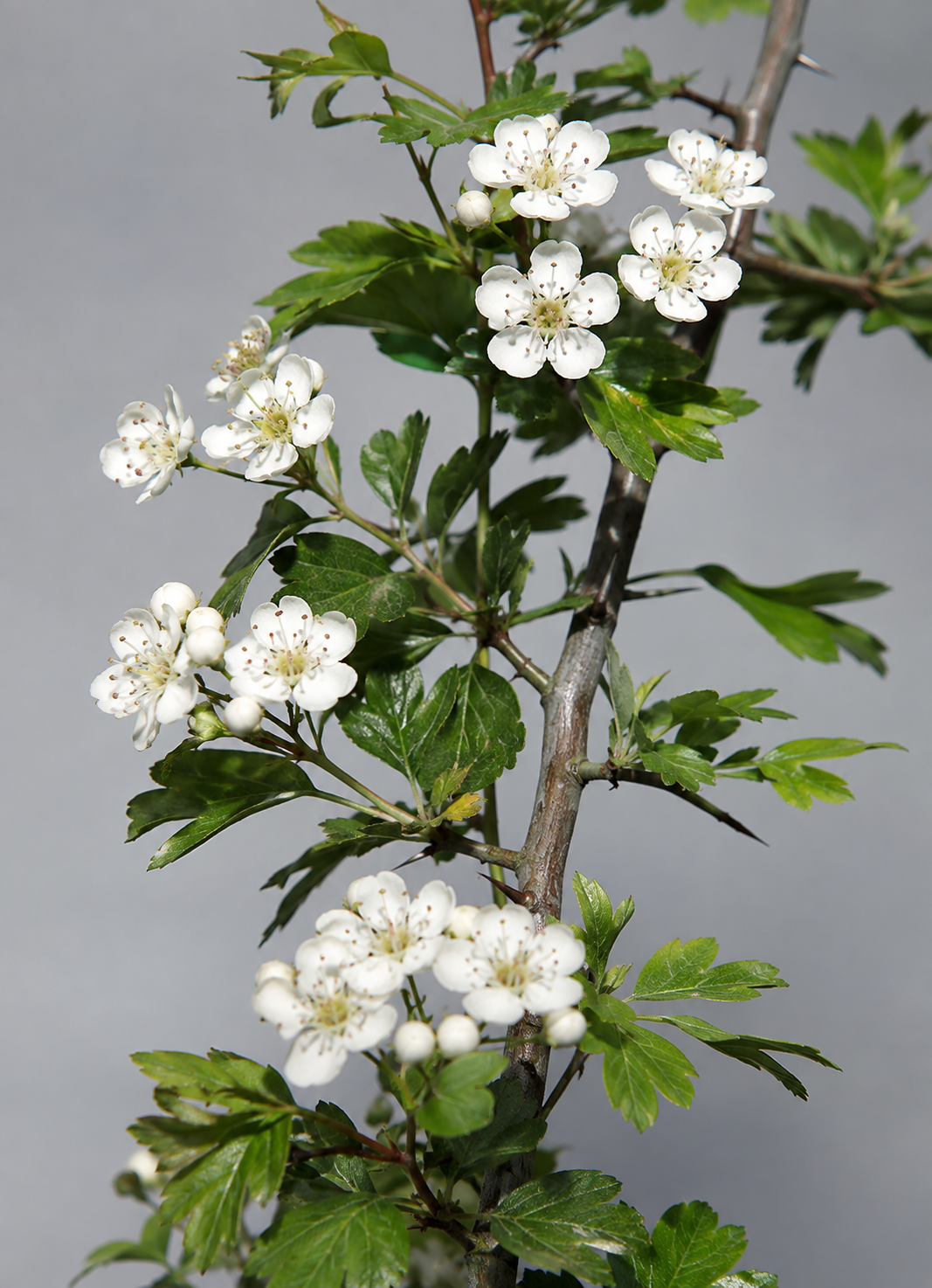
Plants of the World Online accepts C. monogyna and records a native range from Europe to the Caucasus and from North Africa to Iraq. It is a deciduous thorny tree or large shrub with deeply lobed leaves, clusters of white flowers, and red pomes known as haws. It has also been introduced widely, including in parts of North America and Australasia.
Nicholas Culpeper explicitly described hawthorn as a tree of Mars. This is treated as a historically documented correspondence. Later associations with Venus, love, May blossom, marriage, the heart, and protective boundary are presented as later folklore or modern Hermetic interpretation rather than merged into a single timeless system.
The European Medicines Agency recognizes traditional-use hawthorn leaf-and-flower preparations for temporary nervous cardiac complaints after serious conditions have been excluded by a medical doctor, and for mild mental stress and sleep support. NCCIH, however, emphasizes that quality evidence is limited or conflicting for most promoted conditions and that hawthorn must not replace established cardiovascular care.
Within HRMTC ALKMY ™, hawthorn is studied as a tree of guarded openness: thorn and blossom, hedge and threshold, white flower and red fruit, protection and invitation. Its symbolic heart must remain distinct from medical claims about the human cardiovascular system.
In This Monograph
01
Botanical Identity and Authentication
Hawthorn authentication is unusually important because Crataegus is a large, taxonomically complex genus, species hybridize, and the common name is used for European, Asian, and North American plants as well as for products made from different plant parts.
Botanical Profile
- Common Name
- Hawthorn, common hawthorn, whitethorn, May-tree
- Primary Botanical Name
- Crataegus monogyna
- Botanical Authority
- Jacq.
- Plant Family
- Rosaceae
- Growth Form
- Thorny deciduous large shrub or small tree
- Related Medicinal Species
- C. laevigata, specified hybrids, and other species listed in professional monographs
- Parts Discussed
- Leaf with flower and fruit; retail blends may contain several parts
- Plant Condition
- Fresh or dried, depending on preparation
Geographic Profile
- Kew-Recorded Native Range
- Europe to the Caucasus and North Africa to Iraq.
- Introduced Range
- Introduced in parts of North America, South America, southern Africa, Australia, New Zealand, and Atlantic islands.
- Preferred Habitat
- Hedgerows, scrub, woodland margins, pastures, open slopes, roadsides, and disturbed ground.
- Climate
- Temperate; tolerant of varied soils when drainage is adequate.
- Growth Character
- Dense thorny branching; capable of forming hedges and spreading through seed dispersal by birds and mammals.
Harvest Profile
Leaf and Flower
Collected during flowering under the applicable professional or supplier specification. The proportion of leaf, flowering shoot, and flower affects identity and composition.
Fruit
Haws are gathered when mature, commonly red, and fully identified. Fruit preparations are chemically and clinically distinct from leaf-and-flower extracts.
Collection Conditions
Use authenticated material gathered legally and away from roads, sprayed hedges, industrial pollution, livestock contamination, and protected heritage trees.
Identification
General Appearance
A densely branched deciduous shrub or small tree that may reach several metres in height and can be shaped into long-lived hedgerows.
Leaves
Alternate, glossy to matte green, and deeply lobed. In common hawthorn, the lobes are typically cut well toward the midrib.
Twigs and Thorns
Young twigs are slender; short sharp thorns arise from branches. Thorn density varies with age, growth conditions, and pruning.
Bark and Wood
Young bark is smoother and brown-gray; older bark becomes fissured. The wood is hard, dense, and historically valued for durable small implements and fuel.
Flowers
Clusters of five-petaled white to cream flowers appear in late spring. Pink anthers may be visible. The scent can be sweet, heavy, or animalic depending on perception and species.
Fruit
Small red pomes known as haws develop after flowering. C. monogyna commonly has one seed-like stone, reflected in the name monogyna.
Seeds and Stones
The hard inner stones should not be confused with the fleshy fruit. Historical seed uses are not automatically transferable to modern products.
Taste and Aroma
Leaf and flower are mildly bitter and astringent; ripe fruit is tart to mildly sweet and astringent. Taste should not be used as the sole identification method.
Commonly Confused Species
Other European hawthorns, especially C. laevigata and hybrids, may be confused with C. monogyna. North American and Asian hawthorns may share the common name while differing in leaf form, fruit, thorns, chemistry, and traditional use.
Adulteration and Substitution
Do not confuse ordinary leaf, flower, or berry products with “tejocote root” weight-loss products. FDA testing has found multiple products labeled as Mexican hawthorn or tejocote root adulterated with toxic yellow oleander.
02
Ethical Sourcing and Conservation
- Wildcrafted or Cultivated
- Both; commercial traceability favors cultivated or professionally documented material
- Global Conservation Context
- C. monogyna is widespread, but regional populations, old hedges, and associated habitats may be protected
- Primary Sourcing Concern
- Species identity, plant part, roadside contamination, habitat damage, and invasive status
- Ecological Role
- Provides blossom, fruit, nesting structure, shelter, and food for numerous insects, birds, and mammals
Sustainable Harvesting Considerations
Do not strip flowering branches or fruit from a single tree. Leave sufficient blossom and haws for pollinators, birds, mammals, seed dispersal, and natural regeneration. Avoid cutting old hedgerow trees, boundary specimens, or culturally significant hawthorns without permission.
Regional Invasiveness
Common hawthorn is native across much of Europe and neighboring regions but introduced elsewhere. In parts of western North America and other temperate regions it may naturalize or behave invasively. Sourcing should account for local ecology rather than applying one global conservation narrative.
Contamination and Traceability
Hedgerows and roadside trees may be exposed to exhaust, herbicides, salt, pesticides, livestock waste, or industrial contaminants. Commercial material should include species, plant part, lot identity, country of origin, and testing or supplier documentation.
03
Hermetic Correspondences
- Primary Planetary Ruler
- Mars
- Alternative Attributions
- Venus and Sun in later or modern systems
- Primary Element
- Fire through the historically documented Martial attribution
- Alternative Elements
- Earth through hedge, wood, endurance, and fruit; Air through blossom and pollination
- Metal
- Iron through Mars
- Symbolic Sphere
- Boundary, protection, guarded heart, fertility, May renewal, threshold, endurance, and reconciliation of thorn with blossom
Historically Documented Attribution
[Historically Documented] Culpeper states directly that hawthorn is “a tree of Mars.” His explanation emphasizes thorn, pricking, and the idea that the tree provides a remedy for its own wound. The medical claims belong to a seventeenth-century framework and are not modern clinical evidence.
Later Venusian and Solar Readings
[Modern or Later Esoteric Interpretation] White blossom, May festivals, marriage folklore, beauty, fertility, and heart symbolism have led some later systems to emphasize Venus. Red fruit, seasonal radiance, and vitality may also invite solar readings. These should be labeled as later interpretations rather than attributed to Culpeper.
Correspondence Rationale
Mars is visible in thorn, defensive architecture, hard wood, red fruit, blood-colored symbolism, and the tree’s role as a living boundary. Venus appears in blossom, pollinator attraction, marriage custom, sweetness, and the later symbolic heart. Hawthorn’s value lies partly in the tension between these readings.
Conflicting Attributions
Different authors may prioritize thorn, flower, fruit, folklore, medicine, season, or landscape function. The editorial method is not to force Mars and Venus into artificial agreement, but to state which layer is historically documented and which layer is later interpretation.
04
The Tria Prima
The following material interprets observable qualities through Sulfur, Mercury, and Salt. It does not disclose practical laboratory or spagyric procedures.
SULFUR
Soul
Philosophical Expression: Blossom scent, red fruit, seasonal display, attraction, defense, and the unmistakable identity of thorn joined to flower.
Material Expression: Flavonoids, procyanidins, pigments, triterpenes, aromatic traces, and other polyphenolic constituents contribute to the plant’s color, taste, and extract profile.
Interpretation: Sulfur appears as the tree’s character: protective, flowering, fruiting, and visibly transformed across the seasons.
MERCURY
Spirit
Philosophical Expression: Pollination, fragrance, circulation of seed through birds, movement from spring flower to autumn fruit, and mediation between wild margin and cultivated boundary.
Material Expression: Water- and alcohol-extractable fractions vary by species, part, solvent, standardization, and manufacturing process.
Interpretation: Mercury appears in transition and exchange: flower to fruit, hedge to pathway, pollinator to seed disperser, and material to preparation.
SALT
Body
Philosophical Expression: Hard wood, thorn, hedge, seed stone, long-lived structure, boundary, endurance, and memory embedded in landscape.
Material Expression: Structural fiber, mineral ash, hard endocarp, woody tissue, and fixed plant matter establish the enduring body of the tree.
Interpretation: Salt is dominant in hawthorn’s capacity to hold form, define edges, shelter life, and survive repeated cutting or weather.
05
Doctrine of Signatures
- Growth Habitat
- Hedgerow, woodland edge, scrub, field margin, and boundary
- Growth Pattern
- Dense branching, tolerance of pruning, and long-lived hedge formation
- Thorn
- Protection, pain, discrimination, guarded access, and consequence
- Flower
- White blossom, opening, fertility, May renewal, pollination, and invitation
- Fruit
- Red haws, nourishment, autumn maturity, seed, blood symbolism, and continuity
- Wood
- Strength, endurance, fuel, fixed boundary, and material memory
- Seasonal Cycle
- Spring bloom, summer leaf, autumn fruit, winter thorn and branch
- Ecological Relationships
- Pollinator forage, bird food, shelter, nesting, and corridor habitat
Interpretive Meaning
[Symbolic Interpretation] The conjunction of thorn, white blossom, and red fruit invites readings of a guarded heart, protection around tenderness, and the maturation of openness into embodied nourishment. This is a symbolic framework, not evidence for cardiovascular efficacy.
Historical and Folk Associations
May blossom, marriage, fertility, boundary, faery lore, sacred or unlucky cutting, and the Glastonbury thorn belong to distinct historical and regional traditions. They should be documented with location and period rather than presented as universal Celtic belief.
06
Botanical and Chemical Profile
Major Constituent Groups
Flavonoids
Reported compounds include flavone and flavonol derivatives such as vitexin-related compounds and hyperoside. Profiles vary by species and plant part.
Oligomeric Procyanidins
Procyanidins are important quality markers in some standardized hawthorn leaf-and-flower extracts.
Phenolic Acids and Polyphenols
Chlorogenic and related phenolic compounds contribute to antioxidant and analytical profiles.
Triterpenes and Other Constituents
Triterpenic acids, sterols, tannins, organic acids, and minor constituents occur in preparation- and part-dependent patterns.
Fruit Pigments and Sugars
Haws contain anthocyanins, other polyphenols, sugars, pectin, and organic acids that distinguish fruit products from leaf-and-flower medicines.
Potential Quality Markers
Professional products may be standardized to oligomeric procyanidins or flavonoids, but one standardized extract cannot be treated as equivalent to all retail hawthorn products.
Plant-Part Distinction
| Material | Primary Editorial Consideration |
|---|---|
| Leaf with flower | The principal material in EMA traditional-use monographs and many standardized cardiovascular studies. |
| Fruit / haw | Food, traditional, and supplement material with a different chemical profile and evidence base. |
| Mixed aerial parts | Must state whether flowers, leaves, young twigs, or fruit are included and in what form. |
| Root / tejocote root | A separate product category with major adulteration warnings; not interchangeable with European leaf, flower, or berry. |
| Standardized extract | Evidence applies to the named extract, dose, species, part, and manufacturing specification. |
Solubility and Preparation Considerations
Water preparations emphasize different fractions than hydroalcoholic or concentrated dry extracts. Fruit foods, teas, tinctures, capsules, powders, and standardized extracts may differ substantially in flavonoid, procyanidin, sugar, tannin, and excipient content.
Known Variability
Composition varies with species, hybrid status, plant part, flowering stage, fruit maturity, geography, cultivar, storage, extraction solvent, drug-to-extract ratio, and standardization. Literature reviewed through August 2026 should not be generalized beyond the specific preparation studied.
07
Traditional and Contemporary Virtues
This section records use and professional-monograph context. It does not diagnose disease or promise benefit.
Traditional Actions
[Historical Claim] Historical sources record hawthorn fruit, seed, flower, and other preparations for varied digestive, urinary, circulatory, and topical purposes. Culpeper’s specific claims are preserved as historical documentation only.
[Established Traditional Use] European hawthorn leaf-and-flower preparations are recognized for temporary nervous cardiac complaints after serious conditions have been medically excluded, and for mild mental stress and sleep support.
Contemporary Herbal Actions
Modern herbal practice often discusses hawthorn as a cardiovascular trophorestorative or supportive herb. Such language is practitioner tradition and should not be converted into a universal consumer claim. NCCIH reports conflicting evidence for heart failure and insufficient evidence for many other cardiovascular or anxiety-related uses.
Energetic Qualities
- System
- Later Western herbal interpretation
- Temperature
- Often described as neutral to gently warming; varies by part and author
- Moisture
- Mildly drying or astringent
- Tonicity
- Toning and consolidating in practitioner language
- Movement
- Circulating while strengthening boundary
- Taste
- Astringent, tart, mildly bitter, and slightly sweet in ripe fruit
Psychological and Spiritual Associations
[Modern Hermetic Interpretation] Hawthorn is often associated with grief held safely, emotional boundary, guarded affection, reconciliation, courage in tenderness, and opening without surrendering discernment. These are symbolic or practitioner observations, not psychiatric indications.
08
Evidence Classification
EMA Leaf with Flower
The EMA recognizes specified hawthorn leaf-and-flower preparations for traditional-use indications. The conclusion is based on long-standing use, not a finding of well-established clinical efficacy.
Temporary Nervous Cardiac Complaints
Traditional use applies only after serious medical conditions have been excluded and does not authorize self-treatment of unexplained palpitations or heart disease.
Mild Stress and Sleep Support
Recognized for specified leaf-and-flower preparations in adults and adolescents over 12 under the conditions of the professional monograph.
Standardized Extract Research
Some trials and reviews concern named standardized extracts such as WS 1442. Findings cannot be transferred automatically to tinctures, berries, powders, mixed formulas, or unidentified retail products.
Heart Failure and Broader Cardiovascular Claims
NCCIH reports conflicting evidence in heart failure and insufficient evidence for angina, abnormal rhythm, plaque, and many other promoted cardiovascular uses.
Weight Loss
NCCIH reports no evidence that hawthorn affects weight loss. “Tejocote root” weight-loss products also carry a serious FDA adulteration warning.
09
Therapeutic and Preparation Context
Traditional and Professional-Monograph Contexts
- Specified leaf-and-flower preparations for temporary heart complaints related to nervousness only after serious conditions are excluded.
- Specified leaf-and-flower preparations for mild mental stress and to aid sleep.
- Historical fruit and culinary preparations documented separately from medicinal leaf-and-flower extracts.
- Practitioner-guided use in people taking cardiovascular, blood-pressure, rhythm, anticoagulant, antiplatelet, or other prescription medicines.
Preparation Forms
Liquid Extract
Confirm species, plant parts, blend composition, extraction ratio, alcohol content, serving, and warning label.
Capsule or Tablet
May contain powder, dry extract, standardized extract, berry, leaf with flower, or a blend. Capsule count alone does not reveal equivalence.
Infusion
A water preparation of identified plant material. It should not be assumed equivalent to standardized clinical extracts.
Fruit Food or Syrup
Culinary haw products differ from concentrated supplements and do not inherit the evidence of leaf-and-flower extracts.
Standardized Dry Extract
Research applies to the named extract and standardization, not to the genus in general.
Mixed Formula
Every botanical and active ingredient changes the evidence, interaction, allergy, and safety profile.
When Additional Guidance Is Appropriate
Professional review is appropriate for any person with diagnosed cardiovascular disease, unexplained palpitations, fainting, chest symptoms, low blood pressure, planned surgery, pregnancy or breastfeeding, significant chronic illness, or use of prescription medicines.
10
Safety Profile
Cardiovascular Conditions
People with heart failure, abnormal rhythm, angina, blood-pressure disorders, syncope, or other cardiovascular disease should use hawthorn only with qualified clinical oversight. Evidence is conflicting or insufficient for many of these conditions.
Drug and Supplement Interactions
NCCIH advises discussing hawthorn with a healthcare provider when any medicine is used. Cardiovascular and blood-pressure medicines are of particular concern because both the condition and the preparation may affect clinical management.
Pregnancy and Lactation
Reliable safety information is inadequate. Use is not recommended without qualified professional guidance.
Children and Adolescents
EMA traditional use for mild stress and sleep applies to adolescents over 12 for specified preparations; nervous cardiac complaints are restricted to adults. Retail supplement labels may impose different restrictions.
Adverse Effects
Reported effects include dizziness, nausea, vomiting, diarrhea, headache, muscle pain, and other gastrointestinal or circulatory complaints. Stop use and seek advice for concerning symptoms.
Duration of Use
NCCIH notes that research has not established safety beyond 16 weeks for hawthorn supplements generally. Professional monographs may also specify short evaluation periods for traditional-use symptoms.
Surgery and Bleeding
Disclose hawthorn use before surgery and follow the surgical team’s instructions. A 2025 EMA draft revision discussed a possible bleeding concern after cardiac surgery; this remains evolving regulatory information rather than a final universal conclusion.
Allergy
Hawthorn belongs to the Rosaceae family. Allergy is possible, particularly in people sensitive to related plants or to ingredients in mixed formulas.
Tejocote Root Adulteration Warning
Regulatory and Product Notes
Dietary supplements are not approved by FDA before marketing in the same way as drugs. Examine the current product label for species, plant part, extract specification, serving, excipients, contraindications, and warnings. Report adverse reactions through appropriate clinical and regulatory channels.
11
Historical, Cultural, and Ritual Context
Historical Record
Hawthorn has functioned as hedge, boundary marker, wood source, food plant, seasonal emblem, and medicinal material. Its dense branching and tolerance of cutting made it central to agricultural enclosure and village landscapes.
May and Seasonal Tradition
In Britain and Ireland, hawthorn’s late-spring blossom contributed to the names May-tree and May blossom. Regional customs connect it with May Day, fertility, courtship, marriage, and seasonal transition. Calendar timing, however, varies with climate and species.
Glastonbury Thorn
The Glastonbury thorn tradition associates an unusual flowering hawthorn with Christian legend and winter blooming. Culpeper recorded and questioned popular wonder surrounding hawthorns said to flower near Christmas. This material belongs to religious and folkloric history, not botanical proof of supernatural properties.
Boundary and Faery Lore
Some Gaelic, British, and Irish traditions treat solitary hawthorns or boundary trees with particular caution. Stories of faery encounter, taboo cutting, and otherworld thresholds must be attributed to their specific cultural and regional sources.
Cultural Caution
Avoid reducing diverse traditions to a generic “Celtic hawthorn” narrative. Distinguish historical evidence, local folklore, modern magical practice, literary symbolism, and contemporary ecological interpretation.
12
Symbolic Reading
Primary Symbolic Themes
- Boundary
- Protection
- Guarded heart
- Discernment
- Blossom
- Fertility
- May renewal
- Marriage and covenant
- Threshold
- Endurance
- Grief and tenderness
- Fruit after trial
Botanical Symbolism
Hawthorn protects its flowering body with thorns. It forms a wall that is also habitat, and it produces red fruit from white blossom. The plant therefore embodies a boundary that is not sterile: protection makes relationship possible rather than ending it.
Hermetic Interpretation
[Hermetic Interpretation] Hawthorn may be read as Mars guarding Venus. Thorn and iron define the perimeter; blossom and fruit reveal what the perimeter protects. Salt holds the hedge, Sulfur reveals flower and fruit, and Mercury carries pollen, seed, and seasonal transition.
Shadow or Counter-Reading
Protection can become isolation. Loyalty can become enclosure. Romantic heart symbolism can become medical overclaim, while reverence for folklore can become careless invention. Hawthorn asks whether a boundary serves life or merely defends fear.
13
Study Questions
- Why is “hawthorn” insufficient as a publication-grade botanical identity?
- How do C. monogyna, C. laevigata, hybrids, and other medicinal species complicate product comparison?
- Why must leaf with flower, fruit, and root be treated as separate materials?
- What makes Culpeper’s Mars attribution historically significant?
- How do later Venusian readings differ from the documented Martial attribution?
- Why must symbolic heart imagery remain separate from cardiovascular evidence?
- What does the EMA traditional-use conclusion establish, and what does it not establish?
- Why do named standardized extracts have preparation-specific evidence?
- What ecological responsibilities accompany harvesting from hedgerows?
- What does hawthorn teach about the relationship between boundary and tenderness?
15
References and Source Record
Botanical References
Professional and Governmental Sources
- European Medicines Agency — Crataegi folium cum flore herbal medicinal product page.
- EMA — European Union herbal monograph on Crataegus spp., folium cum flore.
- EMA — Final assessment report on hawthorn leaf with flower.
- National Center for Complementary and Integrative Health — Hawthorn: Usefulness and Safety, updated April 2025.
- U.S. FDA — Warning about products labeled as tejocote root or Mexican hawthorn substituted with toxic yellow oleander.
Chemical, Pharmacological, and Safety Reviews
- Review of the polyphenolic composition, botanical profile, and medical applications of Crataegus monogyna.
- Benefit-risk review of the standardized hawthorn extract WS 1442.
- Analysis of adverse reactions associated with Crataegus-containing herbal products.
- Systematic review of the adverse-event profile of Crataegus preparations.
Historical and Correspondence Sources
Product Resources
- Herb Pharm — Hawthorn Blend liquid extract, linked through Fullscript.
- MediHerb — Hawthorn capsules, linked through Fullscript.
Archive Notes
Hawthorn holds together what shallow symbolism separates: thorn and flower, protection and hospitality, edge and habitat, grief and renewal. Its boundary is alive because it feeds, shelters, blooms, and bears fruit.
The archive therefore approaches hawthorn through disciplined distinction. Species before common name, plant part before product category, evidence before claim, clinician before self-treatment, and historical correspondence before modern synthesis. Only then can the guarded heart become a worthy symbol rather than a commercial promise.
Revealed in Practice.