
HERBARIUM / ADVANCED PLANT MONOGRAPH
Valerian
Valeriana officinalis L.
A temperate perennial of Mercury, descent, sleep, scent, nervous tension, gradual action, and the disciplined distinction between traditional calming use and evidence for chronic insomnia.
MONOGRAPH PROFILE
Quick Reference
- Botanical Name
- Valeriana officinalis
- Botanical Authority
- L.
- Plant Family
- Caprifoliaceae
- Primary Planetary Ruler
- Mercury
- Element
- Air through nervous-system and scent symbolism; Earth through root, descent, and fixation
- Metal
- Mercury / quicksilver by planetary correspondence
- Tria Prima Emphasis
- Mercury / Salt
- Primary Part Used
- Rhizome, roots, and stolons
- Plant Condition
- Usually dried; fresh-root products must be identified separately
- Preparations Discussed
- Liquid extract, capsules, tea, dry extract, and combination products
- Safety Classification
- Significant Caution
- Primary Safety Concerns
- Drowsiness, alcohol or sedative combinations, driving impairment, long-term-use uncertainty, withdrawal after chronic use, pregnancy/lactation uncertainty, and rare liver-injury reports
- Conservation / Sourcing
- Widely cultivated; underground-part harvesting, species substitution, aroma loss, adulteration, and storage quality require attention
ENTRY SUMMARY
Valerian at a Glance
Valeriana officinalis L. is an accepted perennial species in the Caprifoliaceae family. Kew records its native range from Europe to northwestern Iran and describes it as a temperate medicinal and food plant.
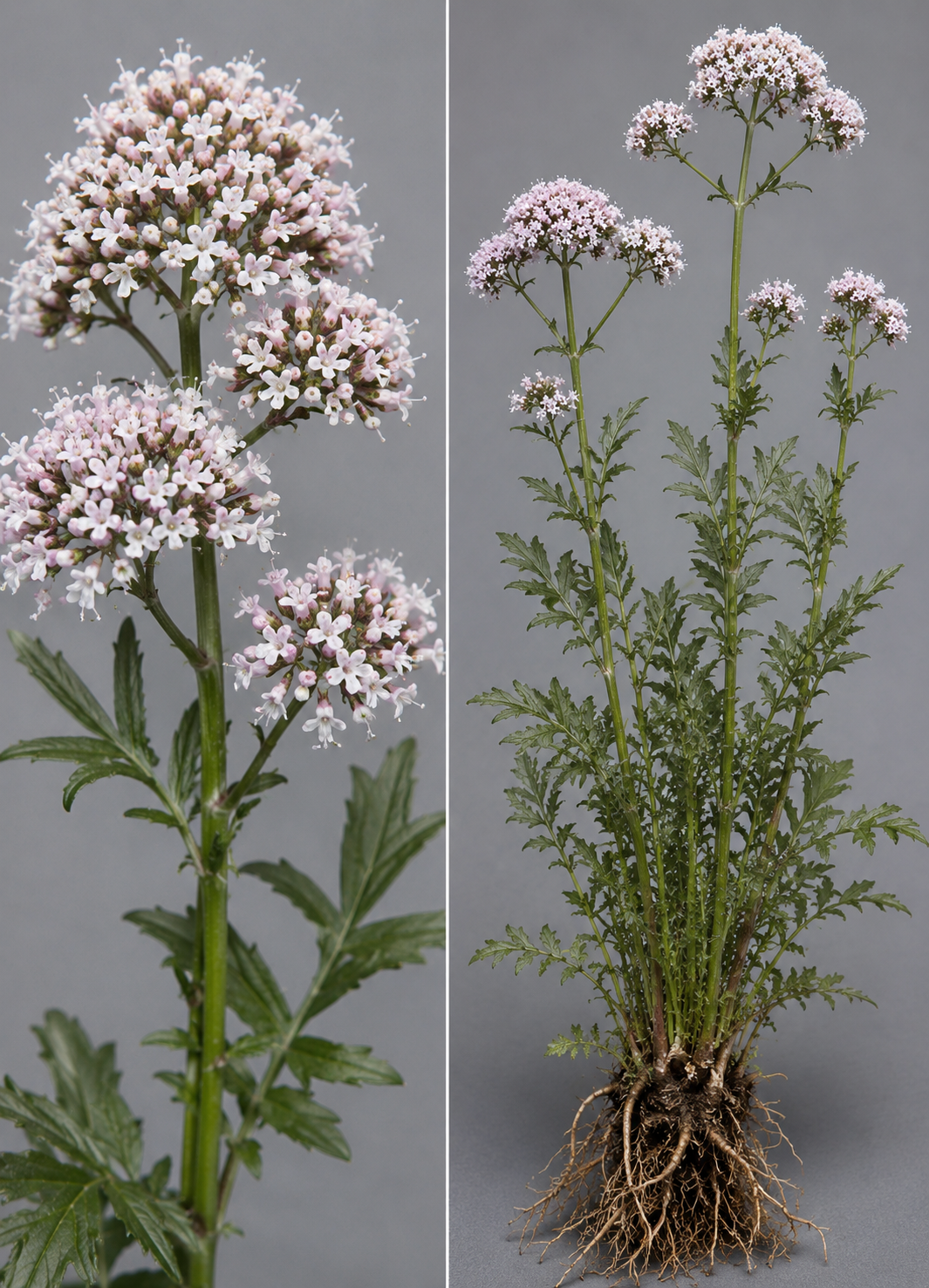
The plant bears pinnately divided leaves, hollow or ridged flowering stems, and clusters of small pale pink to white flowers. Its short rhizome and fibrous roots develop the strong characteristic odor associated with dried valerian drug material.
EMA distinguishes between a specific ethanolic dry extract with well-established use for mild nervous tension and sleep disorders and other root preparations supported by traditional use for mild mental stress and to aid sleep. EMA also notes that valerian’s effect develops gradually, so it is not suited to acute intervention.
NCCIH takes a more conservative view of the broader supplement market: research is limited, evidence for sleep problems is inconsistent, and there is not enough evidence to determine whether valerian is useful for any health condition. These positions are not necessarily contradictory because EMA’s conclusion applies to defined preparations, while NCCIH addresses the evidence base more broadly.
Culpeper described garden valerian as being under Mercury. Its scent, mobility of action, relation to nervous tension, and historical role as a mediator between wakefulness and sleep support later Mercurial interpretation.
Within HRMTC ALKMY ™, valerian is studied as a plant of guided descent: the visible flowering body rises upward while the medicinal root draws attention downward toward rest, containment, and the limits of conscious effort.
In This Monograph
01
Botanical Identity and Authentication
This entry concerns Valeriana officinalis L. Common names such as valerian, all-heal, garden valerian, and garden heliotrope do not establish identity, and multiple Valeriana species enter regional medicine or commerce.
Botanical Profile
- Common Names
- Valerian, garden valerian, all-heal, garden heliotrope
- Botanical Name
- Valeriana officinalis
- Botanical Authority
- L.
- Plant Family
- Caprifoliaceae
- Taxonomic Status
- Accepted species in Plants of the World Online
- Primary Medicinal Material
- Dried underground parts: rhizome, roots, and stolons
- Other Materials
- Fresh root, essential oil, flowering herb, and combination products require separate documentation
- Plant Condition
- Usually dried for professional root drug; fresh-root extracts differ
Geographic Profile
- Native Range
- Europe to northwestern Iran according to Kew.
- Introduced / Cultivated Range
- Widely cultivated and naturalized in temperate regions, including parts of North America.
- Preferred Habitat
- Moist meadows, stream margins, damp woodland edges, ditches, and cultivated gardens.
- Growth Form
- Rhizomatous perennial with a basal leaf system and tall flowering stems.
- Season
- Flowers in summer; underground parts are harvested according to the applicable specification and cultivation cycle.
Harvest Profile
Underground Parts
Rhizome, roots, and stolons are harvested after sufficient development. Age, season, moisture, and post-harvest handling affect aroma and chemistry.
Drying
Controlled drying develops and preserves the characteristic odor. Excess heat, moisture, and poor ventilation can degrade or contaminate the material.
Collection Conditions
Cultivated, documented material is preferred. Avoid wetland damage, mixed species, mold, soil contamination, and roots collected from polluted drainage areas.
Identification
Leaves
Opposite leaves are pinnately divided into multiple narrow, toothed leaflets, with upper leaves generally smaller.
Stems
Upright, hollow or furrowed flowering stems may reach substantial height and branch near the inflorescence.
Root and Rhizome
A short crown-like rhizome gives rise to numerous slender roots and occasional stolons.
Aroma
Dried root has a strong, distinctive, earthy, sweet, musky, or animalic odor that intensifies during drying and storage.
Flowers
Small pale pink to white flowers occur in broad branched clusters and possess a light fragrance.
Fruit
Small dry fruits develop a feathery pappus-like crown that assists dispersal.
Taste
Root is aromatic, earthy, slightly bitter, and distinctive. Taste should support—not replace—authentication.
Animal Response
The root odor may attract cats and some other animals, but this is not a reliable authentication test.
Commonly Confused Materials
Other Valeriana species, spikenard relatives, unrelated roots sold for sleep, and combination formulas may be confused with common valerian.
Adulteration and Quality Problems
Root material may contain exhausted drug, excessive crown or stem, soil, mold, unrelated roots, or weak aromatic material. Require botanical identity, plant-part definition, origin, lot, contaminant testing, and extract documentation.
02
Ethical Sourcing and Conservation
- Wildcrafted or Cultivated
- Both; cultivated root offers stronger identity, sustainability, and contaminant control
- Conservation Context
- Common valerian is broadly distributed, but underground-part harvesting destroys individual plants and regional populations must be assessed
- Primary Sourcing Concern
- Root-harvest impact, wetland disturbance, species substitution, mold, soil contamination, pesticide exposure, and loss of volatile quality
- Recommended Practice
- Prefer cultivated, traceable material with documented drying and testing
Root-Harvest Ethics
Harvesting the medicinal underground parts removes the plant. Wild collection should never occur in small, protected, or ecologically sensitive populations. Cultivation is generally preferable for commercial use.
Habitat Protection
Moist meadows and stream margins can be vulnerable to trampling, erosion, and soil disturbance. Collection should avoid destabilizing banks or damaging wetland communities.
Quality and Traceability
Prefer suppliers disclosing botanical name, country of origin, cultivation status, root age, harvest season, drying conditions, extraction solvent, alcohol content, ratio, lot number, and contaminant testing.
03
Hermetic Correspondences
- Primary Planetary Ruler
- Mercury
- Historically Documented Source
- Culpeper’s Garden Valerian entry
- Metal
- Mercury / quicksilver
- Primary Elemental Reading
- Air through scent, nervous movement, thought, and mediation
- Secondary Elemental Reading
- Earth through root, sleep, descent, embodiment, and fixation
- Symbolic Sphere
- Transition, rest, nervous mediation, dream, descent, odor, concealment, and release from excessive vigilance
Historical Attribution
Historically Documented Culpeper states that garden valerian is under the influence of Mercury and records the stronger medicinal importance of the root.
Correspondence Rationale
Mercury appears through strong scent, variable sensory response, nervous-system symbolism, and the plant’s role as mediator between wakefulness and sleep. Earth is present in the medicinal root and the downward movement into rest.
Alternative Attributions
Later authors may assign the Moon, Saturn, or Water because of sleep, dream, night, or damp habitat. Such systems should be labeled as later interpretations rather than replacing the historically documented Mercury attribution.
04
The Tria Prima
This section distinguishes observable qualities from Hermetic interpretation and does not disclose laboratory or spagyric procedures.
SULFUR
Soul
Philosophical Expression
Distinctive odor, aromatic individuality, warmth, dream intensity, and the root’s ability to provoke attraction or aversion.
Material Expression
Volatile oil, sesquiterpenes, valerenic-acid-related constituents, and odor-forming compounds.
Interpretation
Valerian’s Sulfur announces itself through scent: invisible yet immediately present.
MERCURY
Spirit
Philosophical Expression
Mediation between wake and sleep, nervous movement, altered attention, dream, volatility, and preparation-dependent action.
Material Expression
Volatile fractions, extraction-sensitive constituents, and the movement of aromatic compounds from root into air and solvent.
Interpretation
Mercury is the dominant principle: valerian is symbolically concerned with transition rather than simple sedation.
SALT
Body
Philosophical Expression
Root, containment, heaviness, rest, grounding, accumulated memory, and the return of attention to the body.
Material Expression
Rhizome, fibrous root structure, fixed minerals, carbohydrates, ash, and nonvolatile plant matter.
Interpretation
Salt receives Mercurial movement and gives it a place to settle. Without Salt, transition becomes agitation rather than rest.
05
Doctrine of Signatures
Doctrine-of-signatures material is symbolic or historical interpretation and is not evidence of efficacy.
Interpretive Meaning
Modern Symbolic Interpretation The pale flowers rise into air while the medicinal root remains concealed in earth. This creates an image of the mind returning from dispersed attention toward bodily depth.
Counter-Reading
Rest can become avoidance. Dream can become confusion. Sedation can conceal an untreated sleep disorder. Symbolic descent should not become neglect of diagnosis or daytime safety.
06
Botanical and Chemical Profile
Major Constituent Groups
Principal Chemical Considerations
Valerian chemistry is preparation-sensitive. Valerenic acids and volatile sesquiterpenes are commonly discussed quality markers, while valepotriates are unstable and may degrade during drying, storage, or extraction.
Solubility and Preparation
- Water Preparation
- Extracts water-accessible constituents and some aromatic matter but is not equivalent to ethanolic dry extract
- Alcohol Extract
- Solvent strength and ratio influence valerenic-acid, volatile, and broader lipophilic fractions
- Fresh-Root Extract
- May retain a different constituent profile from dried root and should be labeled separately
- Storage Sensitivity
- Heat, air, moisture, time, and poor packaging can alter odor, volatile fractions, and unstable constituents
Known Variability
Composition varies with subspecies or chemotype, cultivation, soil, harvest time, root age, fresh versus dried status, drying temperature, storage, extraction solvent, ratio, and standardization. A tea, tincture, dry extract, and root powder should not be treated as identical.
Chemical and regulatory literature reviewed through: August 2026.
07
Traditional and Contemporary Virtues
Well-Established Use
Well-Established Use EMA recognizes a specific valerian-root ethanolic dry extract for relief of mild nervous tension and sleep disorders on the basis of clinical evidence and established medicinal use.
Traditional Use
Established Traditional Use Other specified valerian-root preparations may be used for relief of mild symptoms of mental stress and to aid sleep on the basis of long-standing use.
Historical Claims
Historical Claim Culpeper recorded urinary, respiratory, digestive, antidotal, wound, and other uses. These claims belong to early-modern medicine and are not contemporary recommendations.
Contemporary Herbal Context
Valerian is promoted for sleep, stress, anxiety, and nervous tension. NCCIH concludes that evidence is inconsistent or insufficient across these conditions and notes that a major sleep guideline recommended against valerian for chronic insomnia in adults.
Energetic Qualities
- System
- Later Western herbal interpretation
- Temperature
- Warming
- Moisture
- Mixed; drying aromatic character with relaxing or grounding use
- Tonicity
- Relaxing, with occasional paradoxical stimulation
- Movement
- Descending and settling
- Primary Traditional Affinity
- Nervous and sleep-related spheres
Spiritual and Ritual Associations
Hermetic Interpretation Sleep, dream, transition, calming of excessive vigilance, boundary between waking and rest, and descent into embodied awareness.
08
Evidence Classification
Authoritative Monograph
EMA maintains professional materials for valerian root and distinguishes well-established use of a specific ethanolic dry extract from traditional use of other preparations.
Clinical Evidence
Evidence supports EMA’s defined dry extract in specified contexts, but broader research on valerian for sleep is inconsistent and cannot be generalized to all products.
Chronic Insomnia
NCCIH reports that a 2017 clinical guideline recommended against valerian for chronic insomnia in adults.
Traditional Use
Specified root preparations have long-standing use for mild mental stress and to aid sleep.
Insufficient Evidence
NCCIH states that evidence is insufficient to determine usefulness for anxiety, depression, menstrual conditions, stress, or other promoted uses.
Historical Claim
Culpeper’s respiratory, urinary, wound, plague, and antidotal claims remain historically labeled.
Hermetic Interpretation
Mercury is historically documented; Air, Earth, dream, descent, and mediation are correspondence-based readings.
09
Therapeutic and Preparation Context
Professional-Monograph Contexts
- Relief of mild nervous tension for a defined ethanolic dry extract.
- Sleep disorders for the defined ethanolic dry extract.
- Mild symptoms of mental stress and aid to sleep for other specified traditional preparations.
- Gradual onset: valerian is not intended as an acute rescue intervention.
Preparation Forms
Liquid Extract
Confirm fresh or dried root, extraction ratio, alcohol percentage, serving, timing, age limits, and sedation warnings.
Root Capsules
Confirm root powder versus extract, amount per serving, standardization, excipients, timing, and label warnings.
Ethanolic Dry Extract
EMA’s well-established-use conclusion applies to a defined preparation, not automatically to every capsule.
Tea / Infusion
A water preparation of dried root with its own sensory, chemical, and traditional-use profile.
Combination Sleep Formula
Safety and evidence depend on every ingredient and cannot be attributed to valerian alone.
Fresh-Root Product
Fresh-root extracts differ chemically and aromatically from dried-root preparations and require separate labeling.
When Professional Evaluation Is Appropriate
Seek professional assessment for chronic insomnia, loud snoring or breathing pauses, severe daytime sleepiness, depression, panic, suicidal thoughts, restless legs, medication-related insomnia, pregnancy, breastfeeding, liver disease, long-term use, or use with sedatives.
10
Safety Profile
Drowsiness and Impairment
Valerian may cause sleepiness or mental dullness. Timing and individual response vary. Do not drive, operate machinery, or perform hazardous work when impaired.
Alcohol and Sedatives
NCCIH advises against combining valerian with alcohol or sedatives because additive sleep-inducing effects are possible. This includes prescription sedatives, over-the-counter sleep products, and sedating herbs.
Short-Term versus Long-Term Use
NCCIH reports apparent short-term safety in adults for up to six weeks in studied amounts, while long-term safety remains unknown.
Withdrawal after Chronic Use
Abrupt discontinuation after chronic use has been associated with anxiety, irritability, heart disturbances, insomnia, and rarely hallucinations. Long-term users should seek professional guidance before stopping suddenly.
Common Adverse Effects
Headache, stomach upset, mental dullness, excitability, uneasiness, and vivid dreams have been reported.
Paradoxical Stimulation
Some individuals experience agitation, excitability, or worsening sleep rather than relaxation. Stop use and reassess if symptoms intensify.
Rare Liver Injury
Rare liver injury has been reported, most often with combination herbal products. Stop use and seek care for jaundice, dark urine, unusual fatigue, persistent nausea, or upper-abdominal pain.
Pregnancy and Lactation
Safety is insufficiently established. Medicinal use is not recommended without qualified professional guidance.
Children and Adolescents
Age limits depend on the specific preparation and regulatory label. Do not use adult sleep products in children without professional guidance.
Surgery and Procedures
Because sedation is possible, disclose valerian use before surgery, anesthesia, dental sedation, or procedures requiring sedating medicines.
Route- and Product-Specific Safety
- Liquid Extract
- Review alcohol content, serving, timing, medicine interactions, pregnancy/lactation, and driving warnings
- Capsules
- Review root powder versus extract, amount, standardization, excipients, combination ingredients, and sedative effects
- Combination Products
- Additive effects may occur with hops, passionflower, melatonin, antihistamines, alcohol, or prescription sedatives
- Chronic Use
- Long-term safety is unknown; avoid abrupt discontinuation after prolonged regular use without guidance
11
Historical, Cultural, and Ritual Context
Ancient and Medieval Record
Valerian has a long European medicinal history. Historical texts associate it with sleep, nervous conditions, pain, respiratory complaints, wounds, protection, and broad “all-heal” reputation.
Culpeper’s Garden Valerian
Culpeper describes the divided leaves, pale flowers, strong root odor, garden cultivation, medicinal importance of the root, and Mercury rulership. His broad therapeutic claims remain historical rather than modern clinical guidance.
Scent and Animal Folklore
The root’s odor has long been noted for attracting cats and creating strong human reactions. Folklore therefore places valerian between medicine, animal magnetism, attraction, and aversion.
Sleep Culture
Modern marketing often treats valerian as a universal natural sleeping pill. Historical use, EMA’s preparation-specific medicinal recognition, and NCCIH’s broader evidence caution should remain visibly distinguished.
Cultural Caution
Do not merge ancient Mediterranean use, early-modern Mercury correspondence, European folk medicine, modern phytopharmaceutical extracts, and dietary-supplement marketing into one uninterrupted tradition.
12
Symbolic Reading
Botanical Symbolism
The plant rises into airy flower clusters while keeping its strongest sensory and medicinal identity underground. This reversal directs symbolic attention away from appearance and toward hidden foundation.
Hermetic Interpretation
Mercury governs passage, exchange, and mediation. Valerian’s symbolic role is to negotiate the threshold between alertness and sleep, movement and settling, thought and body.
The Lesson of Gradual Action
EMA’s observation that valerian acts gradually provides a useful symbolic teaching: true descent into rest cannot always be commanded instantly.
Shadow or Counter-Reading
Rest can become avoidance. Sedation can become dependency or unsafe impairment. Dream can replace action. The plant’s teaching requires rhythm rather than escape.
13
Study Questions
- Which underground parts constitute professional valerian root?
- Why are fresh-root and dried-root extracts not interchangeable?
- What makes Mercury a historically documented attribution?
- How does EMA distinguish well-established use from traditional use?
- Why is valerian not suitable as an acute intervention?
- What does NCCIH conclude about sleep evidence?
- Why should alcohol and sedatives not be combined casually with valerian?
- What risks arise from long-term use and abrupt discontinuation?
- How do Mercury and Salt interact in the plant’s symbolic form?
- What does valerian teach about rest, gradual transition, and the limits of self-treatment?
15
References and Source Record
Botanical References
Professional and Governmental Sources
Historical and Correspondence Sources
Product Resources
- Herb Pharm — Valerian liquid extract, linked through Fullscript.
- Thorne — Valerian Root capsules, linked through Fullscript.
Archive Notes
Valerian places the medicinal center beneath the visible flower. Its root carries the stronger scent, the stronger historical use, and the symbolic movement downward toward rest.
The archive must preserve the same distinction between visibility and substance. A familiar sleep claim is not enough. Preparation, evidence, duration, interaction, impairment, and diagnosis must all be considered before a product is treated as useful.
Revealed in Practice.